The French Bulldog is one of the most popular breeds on earth. It's also one of the most genetically compromised. Both of those things are true, and both matter.
People in this breed tend to pick one of those sentences and defend it to the death. The breed's defenders talk about popularity and personality and refuse to look at the health data. The breed's critics talk about the health data and conclude the whole animal should be abolished. Neither position does a single living dog any good.
I think the honest position is harder and more useful: this breed is worth keeping, and keeping it will require breeders to do things the breed clubs have spent a century refusing to do.
The problem
The bottleneck.
A Kennel Club population analysis cited in the breed's own Breed Health and Conservation Plan for the French Bulldog put the breed's effective population size at roughly 132 as of 2015.
Effective population size is not a headcount. It is a measure of how many individuals are actually contributing genetically — how wide the pool of distinct genetic material really is. There are millions of French Bulldogs alive. Genetically, the breed behaves like a population of about a hundred and thirty. Conservation biologists get nervous below 100 and treat anything under 50 as an emergency.
That number is the residue of a bottleneck. The breed passed through a very narrow set of popular sires in the 1980s and 1990s, and popularity accelerated it: when a stud wins, everybody breeds to that stud, and a generation later half the breed shares his chromosomes. Every modern Frenchie inherits that narrow pool. It's why the same handful of conditions keep surfacing no matter how carefully individual breeders select — you cannot select your way out of variation that no longer exists in the population.
The mechanism
What hybrid vigor actually is.
Heterosis — hybrid vigor — is the observation that crossing two differentiated populations tends to produce offspring that outperform both parents on fitness traits: survival, fertility, growth, disease resistance. It is one of the best-documented effects in applied biology, and it underwrites most of modern agriculture. The mechanism is not mysterious: in a closed, inbred population, deleterious recessives accumulate and start pairing up. Introduce unrelated genetics and those recessives get masked by functional copies again.
Inbreeding depression is the same phenomenon read backwards, and a closed studbook guarantees it over a long enough timeline. Every pedigree breed is a closed pool. A pool that was already narrow when it closed is a pool with a deadline.
Occasional, planned outcrosses bring new genetic material into that pool. That is the actual, structural fix for a bottleneck. Everything else is management of a shrinking resource.
Precedent
It's already been done.
The Dalmatian is the case study, and it should end the argument.
Every purebred Dalmatian was homozygous for a mutation causing high uric acid excretion, which produced urate stones — painful, obstructive, sometimes fatal, and universal in the breed. There was no clear dog in the population to breed to, because the variation had been lost entirely. In 1973 a geneticist crossed a Dalmatian to an English Pointer to reintroduce the normal allele, then backcrossed the offspring to Dalmatians generation after generation, selecting for breed type each time.
After many backcrossed generations the resulting dogs were, in every practical sense, Dalmatians that carried a working copy of one gene. The Dalmatian Backcross Project fought the fancy for decades, and in 2011 the AKC accepted the outcrossed dogs into the registry as purebred Dalmatians.
A planned outcross removed a breed-wide lethal defect and produced dogs the registry itself recognized as purebred. Breed clubs can plan outcrosses. They have. It worked.
Honest history
Merle in French Bulldogs.
I breed merle dogs, so let me be the one to say the uncomfortable things about merle.
Merle was not part of the French Bulldog's original color palette. The M allele does not arise spontaneously in a population that doesn't carry it — it is a specific retrotransposon insertion, and it has to be introduced from outside. In French Bulldogs it was almost certainly introduced through crosses to a merle-carrying breed, with Chihuahua the most commonly cited source. Ethical Frenchie's overview of blue merle French Bulldogs lays out that history, and merle-breeding-safety.org documents the welfare crisis that followed merle's spread into breeds with no tradition of managing it.
The UK Kennel Club has stopped registering merle French Bulldogs, at the request of the breed clubs. I understand exactly why they did it. Merle bred by people who don't understand it produces deaf and visually impaired dogs, and the market rewarded the color faster than the community learned to handle it.
And here is the other half of the truth, which the same people rarely say: every Frenchie color came from outcrossing at some point. Black brindle was the only original color of the breed. Cream, fawn, and pied all trace to historical crosses that are now so old nobody objects to them. Merle is just the newest and most contested — its outcross happened recently enough that we can still see the seam.
Which is why my commitment is procedural rather than rhetorical: single merle only, never merle to merle, both parents' cryptic-merle status verified by DNA before a pairing is planned, and every merle puppy BAER tested and examined by a veterinary ophthalmologist before it goes home. If you can't do that, don't breed the color.
A hundred years old
Fluffies were never an outcross.
The long-coat French Bulldog is treated as a modern novelty, and the history says otherwise.
Long coat in this breed comes from a variant of the FGF5 gene — the L4 allele, distinct from the common L1 long-hair variant found in most breeds. Long-haired French Bulldogs appear in the breed's own French literature from the interwar period: Le Bouledogue Français documents "Moony de Montgobert, French Bulldog Angora," and wirehaired French Bulldogs are documented in 1931. The history is summarized here, with additional detail from RickJenn Frenchies.
Fluffies are 100% purebred by DNA. The L1 and L4 distinction is well described by French Bulldogs Lovers, and the gene is native to the breed — it was suppressed because show breeders considered it off standard, not because it came from outside. A recessive that hides for four generations is not an invader. It's inventory.
That distinction matters to this whole argument. Some variation was hidden by the fancy. Some variation was introduced. Both deserve honest labeling, and neither deserves a lie.
The money quote
What preservation actually means.
A preservation breeder isn't stuck in the past. They preserve the breed's future.
Preservation is usually read as a defense of a document — the standard as written, the studbook as closed, the type as it stood in some particular decade. But the thing worth preserving isn't the paperwork. It's the animal, and the animal needs genetic diversity to keep existing.
Outcrosses should be part of generation planning by breed clubs. Not stigmatized. Not hidden. Not accidental, discovered later by a DNA test and quietly buried. Planned, on a documented timeline, with defined selection targets. Documented, so the pedigree tells the truth. Verified, with genotyping at every step. Backcrossed, over the number of generations it actually takes to restore type. Registered, so the work enters the breed's permanent record instead of the gray market.
That is what the Dalmatian people did while everyone told them they were destroying the breed. They saved it.
Our contribution
The Frenchton program.
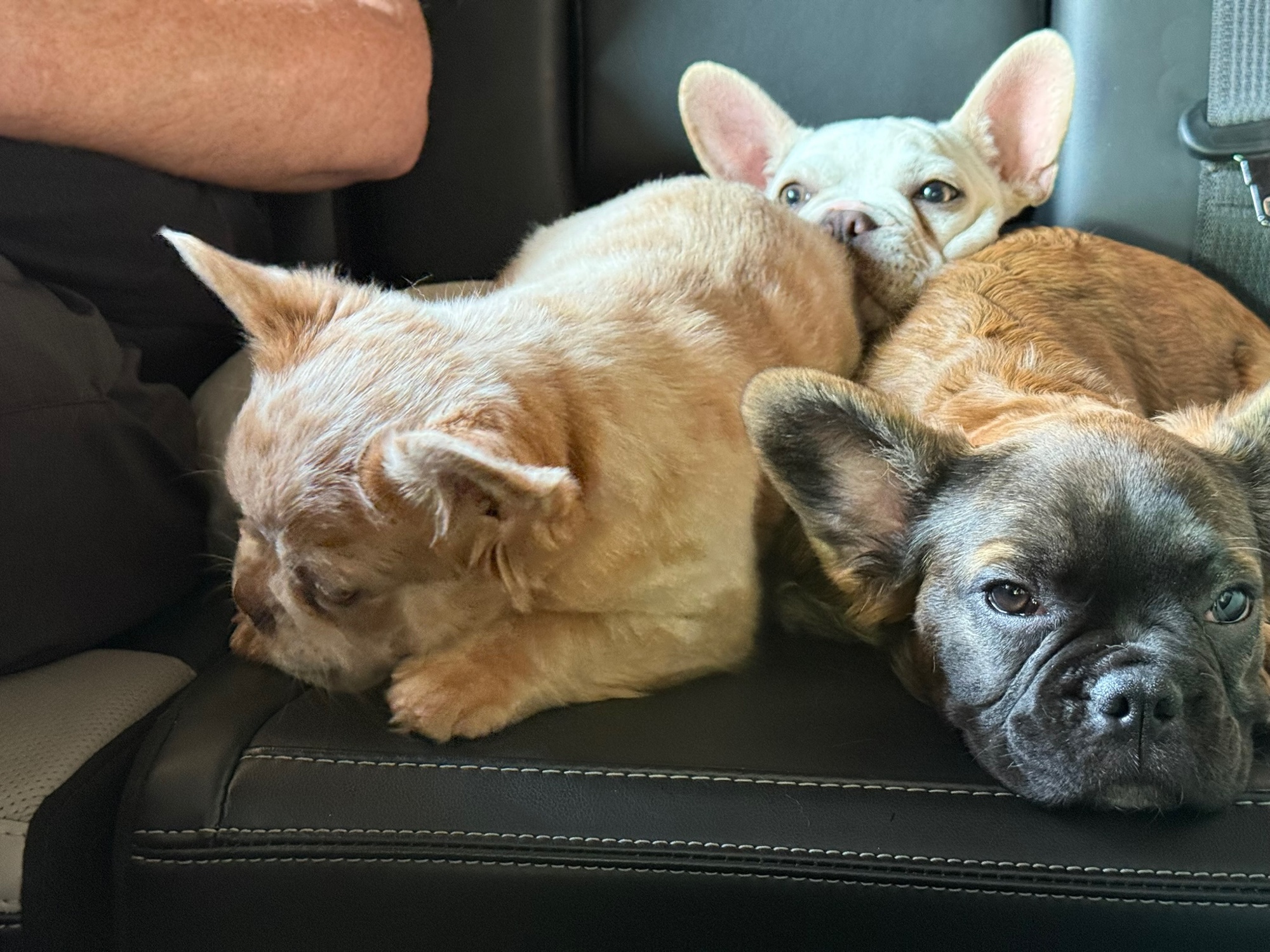
Our Frenchtons are 75% French Bulldog and 25% Boston Terrier. That ratio is deliberate: enough Boston to meaningfully change the airway and the leg, enough Frenchie that the dog is unmistakably a Frenchie in temperament and type.
This is our contribution to the outcross conversation. Not a theory — a documented, genotyped, multi-generation program with dogs you can meet. The measurable benefits are the ones you'd predict from the cross: a longer muzzle and more airway, a slightly longer leg, better heat tolerance, and a longer life expectancy, while keeping the Frenchie temperament we love.
And the rule that makes it honest: Frenchtons are always sold as Frenchtons. Never advertised as Frenchies, never contracted as Frenchies, never priced as Frenchies. If someone is quietly selling a hybrid as a purebred, they are not doing outcross work — they are committing fraud with a genetics vocabulary.
France
The pure line.

Before I bought my first puppy, I flew to France because I wanted to see the breed at home — to meet European breeders and to understand the FCI standard from inside the country that wrote it.
The difference is real and it's not subtle. The dogs I met there were, on average, longer in the muzzle, tighter in the wrinkle, and more athletic than what the American exotic market has been selecting for. Breeders talked about breathing before they talked about color. The standard reads differently when you hear it explained by someone whose grandfather bred to it.

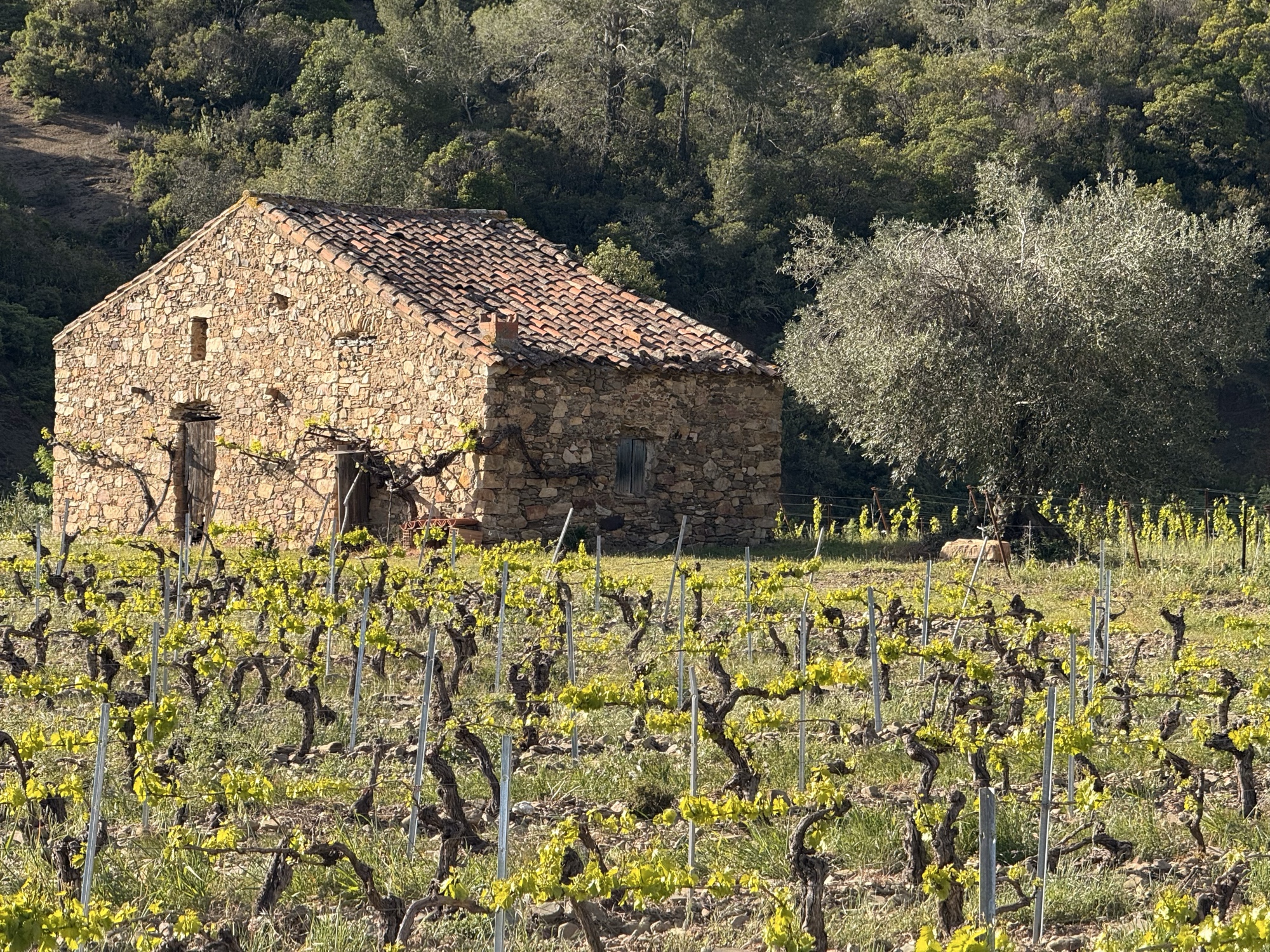
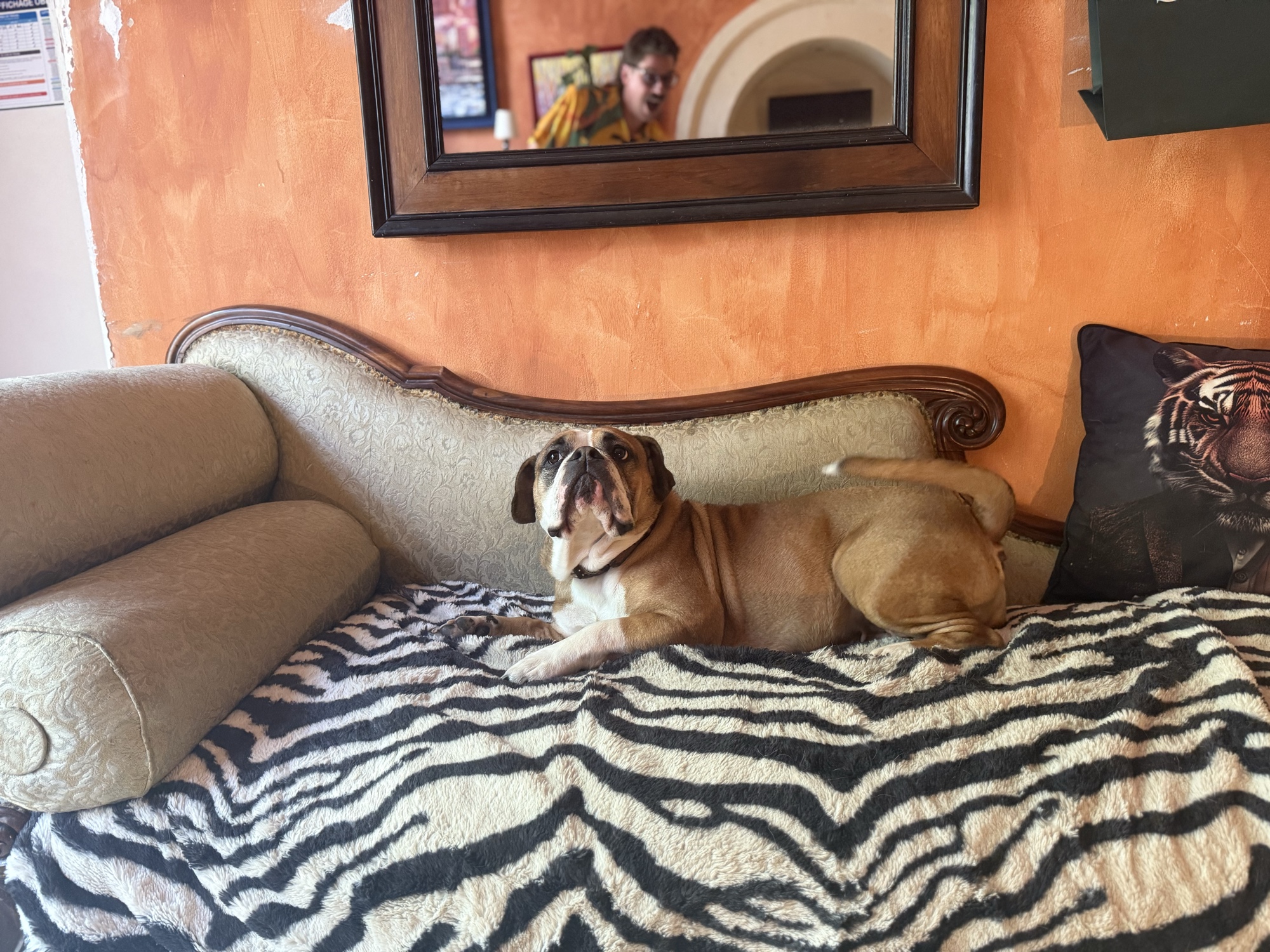
I'm going back this spring. Two European females will be joining our program — for families who love the classic Frenchie standard: fawn, pied, brindle. The pure line.
Where we land
One long project.
Pure Frenchies stay pure. Frenchtons are always sold as Frenchtons. Both are part of one long project: keeping this breed alive for the next hundred years, not just the next generation.